
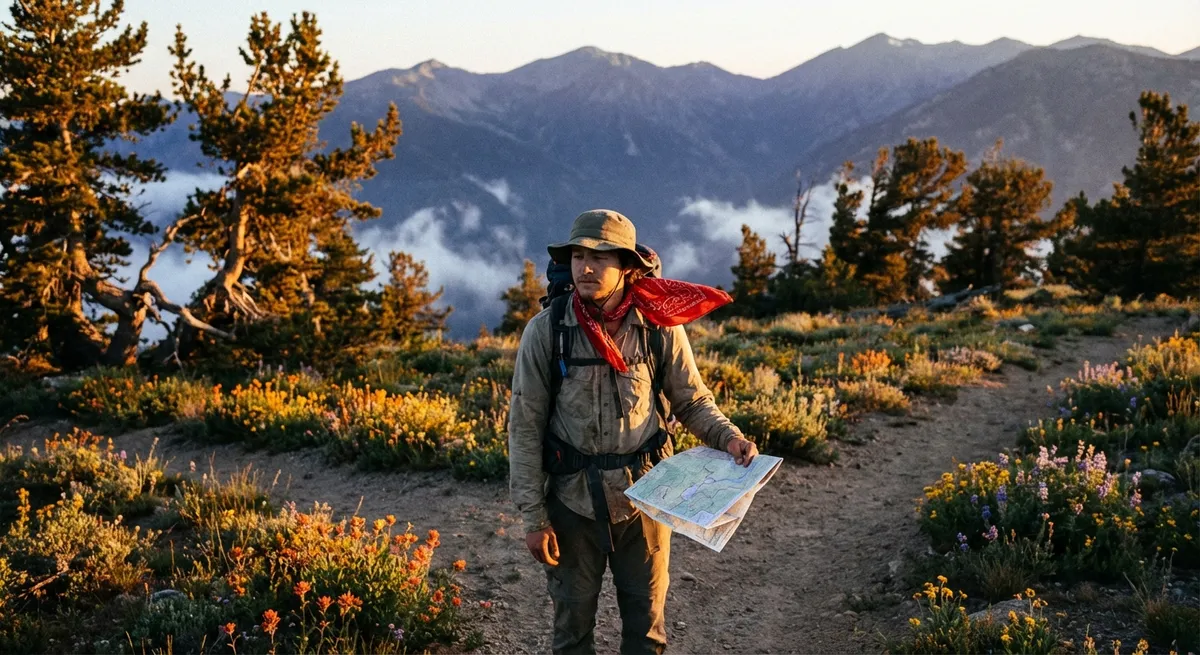
Your life is full of crossroads you can’t see—trail forks hidden in the quiet choices you make. Lace up your boots, step onto dirt, and suddenly those choices feel simpler: left or right, up or down, keep going or turn back. This is where hiking stops being “just a walk” and becomes a way to rewrite how you move through the world.
This TrailNux guide blends practical wisdom, trail-tested gear tips, safety know‑how, and true trail moments into one roadmap—so you can head out not just prepared, but alive to every switchback.
Reading the Land: How to Choose Trails That Match Your Grit
Every trail has a personality. Some are steady and forgiving; others are moody, steep, and wild. Knowing how to read a route before you commit can turn a potential suffer-fest into a powerful, type‑1 fun adventure.
Start by understanding basic trail ratings. Many U.S. trails follow a system similar to ski runs: green for easiest, blue for moderate, black for difficult. But don’t stop at the symbol—check total distance, elevation gain, and terrain notes. A five-mile hike sounds mild until you realize it climbs 2,500 feet over loose rock. Elevation gain is the quiet villain of your day; underestimate it and you’ll feel every step.
Study maps with intention. Topographic lines packed close together signal steep climbs; spread-out lines mean more gentle terrain. Notice river crossings, scree fields, and exposed ridgelines. If you’re new to navigation, start with well-marked, popular trails where the route is obvious and aid is never too far away.
Season matters as much as distance. A mellow summer hike can become an ice trap in shoulder seasons or a heat hazard in mid-July. Check recent trip reports when possible. They’re like messages from time travelers who walked the trail last weekend and came back to warn you: “Snow still on the pass,” “Blowdowns everywhere,” or “Creek crossing waist-deep at 4 pm.”
Most importantly, match trail to intention. Do you want a meditative forest walk, a suffer-then-soar summit day, or a slow wander with a friend who’s never left pavement? Let your goal shape your route, not the other way around. The hike that breaks you today might be the one that builds you in six months—save it for when your legs and lungs are ready.
The Foundation: Footwear, Layers, and the Gear That Actually Matters
Great hikes are built from the ground up—literally. Your boots or shoes are your contract with the trail, and bad ones will collect interest in the currency of blisters, knee pain, and miserable miles.
For most day hikes on established trails, lightweight hiking shoes or trail runners with solid grip and a stable heel are enough. If you’re carrying a heavy pack, moving over rough rock, or have weaker ankles, consider mid or high-cut boots that add support. Focus on fit over brand. Your heel should stay locked in; toes should have space to wiggle and not slam against the front on descents. Try shoes in the afternoon when your feet are slightly swollen—that’s closer to how they’ll feel mid‑hike.
Socks are underrated gear. Choose moisture-wicking, padded hiking socks made of wool or synthetic blends. Cotton holds sweat and increases friction, the perfect recipe for hot spots. A thin liner sock under a thicker hiking sock can help on long days or with sensitive feet.
Clothing should follow a simple rule: manage moisture, trap heat when needed, and block wind and rain. Think in layers:
- Base layer: Wicks sweat away (synthetic or merino wool, never cotton).
- Mid-layer: Insulates (fleece or light puffy jacket).
- Outer layer: Protects from wind and rain (waterproof or windproof shell).
Even on sunny days, pack a light insulating layer and a shell. Weather turns faster in the mountains than most people can hike back to the car.
Then there are the often-forgotten essentials: a small but real first aid kit, headlamp (even if you plan to be back by sunset), knife or multi-tool, and a water treatment method (filter, tablets, or UV). A compact emergency blanket weighs almost nothing but can mean the difference between an uncomfortable night and a dangerous one if something goes wrong.
Finally, choose a backpack that fits your torso, not just your style. Look for a supportive hip belt, sternum strap, and breathable back panel. Load it with intention—heavy items close to your spine and mid-back, lighter things at the top. A pack that moves with you, not against you, turns long days into something you want to repeat.
Safety as a Superpower: Risk, Weather, and Knowing When to Turn Back
Adventure and risk are not the same thing. The wild will always contain both beauty and danger; your job is to bring enough respect and preparation that you get to meet the beauty more often.
Start with the “trip triangle”: plan, prepare, and communicate. Before you go, check the forecast for both trailhead and high points along your route. Mountain weather can be wildly different a thousand feet up. Thunderstorms, high winds, extreme heat, or snow can all turn a routine hike into a rescue scenario.
Tell someone where you’re going—name of the trail, route, estimated start and return time, and who you’re with. This isn’t overkill; it’s your backups’ roadmap if you don’t return on time. In areas without cell service, consider a satellite communicator or personal locator beacon, especially on remote routes.
On the trail, pay attention to early warning signs. Sudden fatigue, dizziness, nausea, or pounding headache might signal heat exhaustion, dehydration, or early altitude sickness. Blurry decision-making is itself a red flag; when judgment goes foggy, risk skyrockets. Drink consistently, snack often, and rest before you’re totally wiped.
Weather shifts deserve decisive responses. Hear thunder? Get off exposed ridges and peaks; lightning favors the high and the isolated. Wind picking up and temps dropping? Add layers before you start shivering. A common mistake is waiting “just a bit longer” to see if conditions improve. In the backcountry, that hesitation can cost you the only good window to descend safely.
The bravest decision isn’t always pushing through—it’s knowing when to turn around. That summit will still be there next weekend, next year, or ten years from now. You only get one body. A turned-back day isn’t a failure; it’s training for the day you’re strong, smart, and lucky enough to stand at the top and know exactly what it took to get there.
Water, Food, and the Quiet Art of Lasting All Day
Your engine doesn’t run on “I’m tough.” It runs on calories, electrolytes, and water. Underfuel and you’ll find your edge disappearing fast; overdo it with the wrong foods and your stomach will revolt when you need it most.
Hydration starts before the trailhead. Drink water in the hours leading up to your hike so you’re not beginning in a deficit. Once on the trail, sip regularly instead of chugging only when thirsty. A common rule of thumb is about half a liter to a liter per hour in moderate conditions, more in heat or at high exertion. Adapt to your body: some people sweat more, some less.
For longer hikes, combining water with electrolytes (sodium, potassium, magnesium) helps your body absorb fluid and maintain performance. Electrolyte tablets or powders pack light and can turn a simple water break into a functional refuel stop.
Think of food as fuel you’ll want to actually eat at mile eight, not just foods that look healthy on your kitchen counter. Aim for a mix of quick carbs (dried fruit, bars, pretzels, trail mix) and slower-burn calories (nut butters, nuts, jerky, cheese, tortillas). Grazing every 45–60 minutes keeps energy steady and helps avoid bonks—that sudden, brutal crash when your body runs out of accessible fuel.
If you’re drawing water from streams or lakes, treat every source, no matter how clean it looks. Filters remove most pathogens; chemical treatments or UV purifiers can act as backups or primary methods if used correctly. A crystal-clear mountain stream can still carry invisible hitchhikers you don’t want to bring home.
The subtle art here is listening. Are you snappy, clumsy, or inexplicably discouraged? Sometimes that’s not a mindset issue—it’s dehydration or hunger wearing a psychological mask. Take five, drink, eat, breathe. The mountain will wait while you reset.
Trail Stories: Moments That Change How You Hike
Every hiker has a story that quietly rewrites their rules. Maybe yours hasn’t happened yet. Until then, borrow a few that the trail has already written for others.
There’s the duo who set out under a cobalt sky, chasing a “quick” shoulder-season summit. Halfway up, the wind turned sharp, and clouds began stacking like bruises on the horizon. They pushed a little farther—“just to that next rise”—until snow started stinging their cheeks. With visibility dropping, they made the call: turn around, no summit. On the way down, they passed another group still heading up in cotton hoodies and sneakers. Later, they learned search and rescue had to be called that afternoon—for hikers trapped high on that same ridge. Their new rule: if the weather feels like a question, the answer is always “descend.”
Then there was the solo hiker who underestimated a canyon trail, armed with nothing but a bottle of water, a phone, and confidence. The descent was intoxicating—red walls, cool shade, endless switchbacks. The climb out was brutal. Heat bounced off stone, water ran out, and the cell signal vanished. Somewhere in that silent, scorching stretch, they realized that suffering had stopped being character-building and had become flat-out dangerous. They made it back, burned and shaken. The trail taught them the difference between courage and carelessness. Their next trip? Better gear, more water, an emergency contact plan, and a new respect for the word “remote.”
You don’t need disaster to learn, though. There are quieter turning points: the first dawn hike where you watch alpenglow paint the world in colors you don’t have names for; the foggy forest walk where you discover how calm your mind can be with nothing but the sound of your boots and your breath; the moment at a trail junction when you take the longer way on purpose, just to see what else the day can hold.
These stories are not about fear. They’re about partnership—with mountains, deserts, forests, and yourself. The more you listen to what the land and your body are saying, the more the trail stops being an obstacle and starts becoming a wise, wild teacher.
Leaving No Trace and Leaving Something Better
Every bootprint tells a story about how we treat the wild. The more people who seek the solace and fire of the trail, the more responsibility we carry to keep those places alive for whoever steps onto them next.
Staying on trail isn’t just about following rules; it’s about protecting fragile ecosystems whose plants may take years to recover from one careless shortcut. Camp and rest on durable surfaces like rock, gravel, or dry grass. Pack out everything—food scraps, toilet paper, microtrash like bar corners and twist ties. If you carry it in, it leaves with you.
Learn basic Leave No Trace principles: respect wildlife by giving them distance; keep noise reasonable so others can experience silence; yield appropriately on shared trails—downhill hikers often step aside for uphill hikers, and everyone gives space to horses.
But go beyond “no trace.” Leave something better: move a piece of litter off the ground, share a spare snack with a hiker who’s clearly struggling, offer route info to a bewildered-looking group at the trailhead. The wild can feel harsh, but trail culture can be remarkably kind. You’re not just walking through nature; you’re joining a living community of people who find a different version of themselves under open sky.
Conclusion
Hiking is more than miles; it’s a conversation between your body, your will, and the landscape under your feet. With the right gear, solid safety habits, and a willingness to learn from every outing—good or bad—you turn each trail into a turning point.
Step onto the dirt with curiosity. Read the skies, study the map, listen to your pulse, and keep your sense of wonder close. Somewhere out there is the ridge, forest, or canyon that will change how you see yourself forever.
Pack smart. Walk bravely. Come back different.
Sources
- National Park Service – Hiking Basics - Covers fundamental hiking preparation, clothing, and safety recommendations from a U.S. federal agency.
- REI Co-op – Hiking for Beginners - Detailed beginner-friendly guide on choosing trails, gear, and planning safe day hikes.
- American Hiking Society – Hike Safety - Offers concise safety tips, planning advice, and risk management guidelines for hikers.
- Leave No Trace Center for Outdoor Ethics – The 7 Principles - Explains the core Leave No Trace practices for minimizing impact on natural areas.
- Centers for Disease Control and Prevention – Hiking Safety - Provides health-focused guidance on hydration, heat safety, and preventing illness while hiking.