
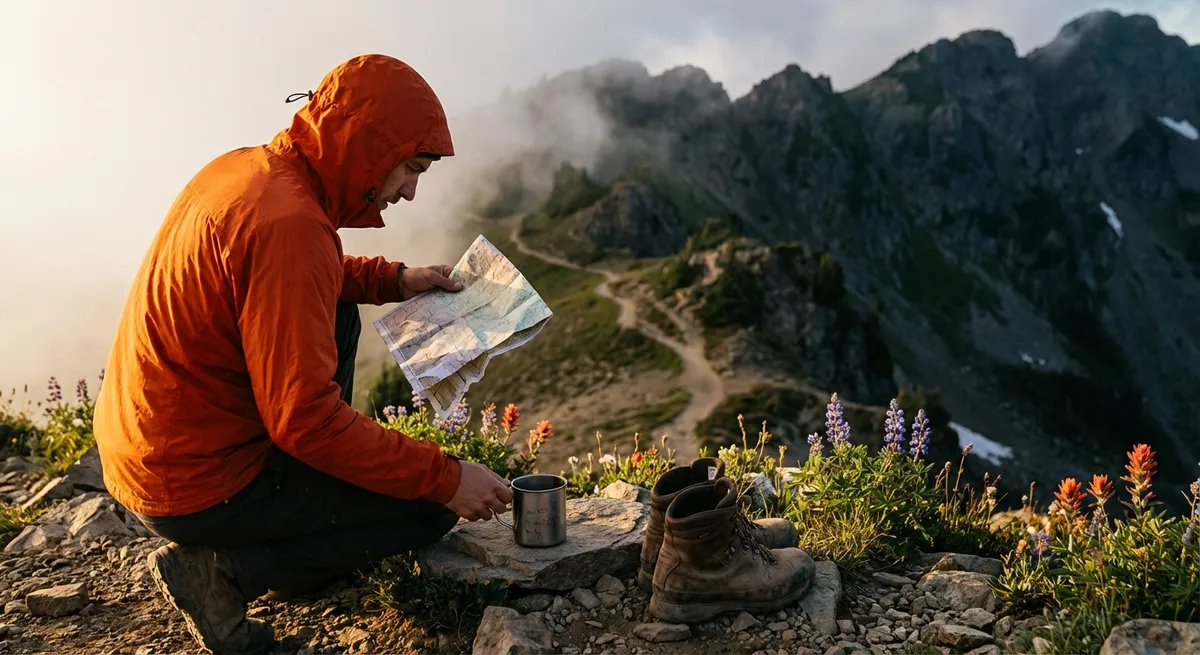
Every great hike begins with a small, defiant decision: I’m going anyway. Whether the forecast looks questionable, your pack feels heavy, or the trail distance scares you a little—in that tension between doubt and curiosity is where the adventure starts. This guide is for hikers who want more than just pretty photos; it’s for those who want to feel alive out there. We’ll walk through essential gear, hard-earned safety wisdom, and trail stories that remind you why lacing up your boots is always worth it.
Gear That Actually Matters (And What You Can Skip)
The outdoor world loves gear—and it’s easy to think you need a truckload of it to “hike properly.” You don’t. What you do need is a small set of well-chosen essentials that keep you safe, comfortable, and confident when the weather shifts or the trail gets real.
Start with your footwear. Your shoes or boots are your foundation, and blisters can turn an epic day into a slow, painful grind. Choose hiking shoes or boots with enough grip (look for deep lugs in the sole), decent ankle support if you’re carrying heavier loads, and a fit that leaves a thumb’s width in front of your big toe to prevent downhill toe-bashing. Always test new footwear on short walks before committing to a long trail.
Next is your pack. For day hikes, a 15–25L backpack is plenty. Look for a supportive hip belt (even on smaller packs), breathable back panel, and side pockets for water bottles. For longer treks, 40–65L packs with load lifters and a real hip belt will save your shoulders. Pack light but smart: prioritize the “Ten Essentials” (navigation, headlamp, sun protection, first aid, knife/repair kit, fire, shelter, extra food, extra water, extra clothing).
Clothing is your invisible shield. Avoid cotton; it soaks, clings, and chills. Choose moisture-wicking base layers, a light insulating mid-layer (like fleece), and a waterproof, breathable shell. Think in systems, not individual pieces: can you add or remove layers easily as you climb, sweat, and rest? A simple cap, buff, or beanie can dramatically shift your comfort level.
Don’t overlook the small but mighty items. A reliable headlamp with fresh batteries, a simple first-aid kit with blister care, trekking poles (especially for steep or unstable terrain), and a power bank for navigation devices can all turn potential disasters into minor inconveniences. Skip the gimmicks that only look good on Instagram—prioritize gear that solves real problems: staying warm, staying dry, staying found.
Trail Safety: Turning “What If” into “I’ve Got This”
The wilderness doesn’t care how many likes your last summit photo got. Weather turns, ankles roll, and daylight fades whether you’re a first-timer or a seasoned thru-hiker. Safety on the trail isn’t about eliminating risk; it’s about stacking the odds in your favor before you step off the pavement.
Begin with a simple but non-negotiable habit: tell someone your plan. Share where you’re going, which trailhead you’re using, your route, who you’re with, and your expected return time. Many rescue stories start with someone knowing where to send help; many tragedies start with no one having a clue.
Navigation is your lifeline. Even on “easy” or popular trails, carry at least two forms of navigation: offline maps on your phone (with GPS enabled and downloaded beforehand) and a physical map—ideally with a basic compass. Learn how to read contour lines and identify landmarks. If your phone dies or a junction sign is missing, you’ll be grateful you put in the time to learn.
Hydration and nutrition aren’t optional extras. Dehydration and low energy can cloud your judgment long before you realize it. Carry more water than you think you’ll need and consider a lightweight filter or purification tablets on longer routes with stream access. Pack energy-dense snacks—nuts, jerky, trail mix, nut-butter packets, and bars you’ll actually want to eat when you’re tired.
Weather awareness is one of the most powerful safety skills you can build. Check the forecast before you go—but also learn to read the sky: fast-building dark clouds, sudden wind shifts, and distant thunder all mean it’s time to reassess your route or turn back. Lightning above treeline, flash floods in slot canyons, and sudden fog in exposed terrain are all real threats. The bravest hikers are the ones who turn around when their gut—and the clouds—say it’s time.
Finally, respect your limits and your environment. If the trail is more ice than dirt, if you’re feeling lightheaded, if you’re hours behind schedule—adjust. Take breaks, shorten your route, or save the summit for another day. The mountain isn’t going anywhere, and your goal is to come back with stories, not scars.
Stories from the Trail: Fear, Failure, and the Magic of Not Quitting
Every unforgettable hike carries a moment where you consider turning back. That’s exactly where the good stories are born. The key is knowing when that hesitation is healthy caution—and when it’s just fear whispering in your ear.
Picture a steep ridge at dawn. The air is thin, your legs are burning, and the summit still looks impossibly far. You’ve already climbed for hours, and the thought hits: Why am I doing this? On one such climb, a hiker stopped just below a false summit, convinced the view “up there” wouldn’t be worth the last brutal push. A stranger, breathing just as hard, simply said, “We’ve already done the hard part. Let’s finish the story.” They reached the real summit 30 minutes later, clouds parting long enough to reveal miles of wild ridgelines. The lesson lingers: sometimes the last 10% holds 90% of the magic.
Not every story ends with a summit, though—and that’s equally important. Imagine a narrow canyon hike where the forecast had seemed fine, but clouds rolled in earlier than expected. The group noticed water in the canyon bottom rising faster than normal and a distant rumble that wasn’t thunder. They made the call to turn back, missing the “epic” waterfall at the end—but back at the trailhead, they heard from rangers that a flash flood had swept through hours later. That “failed” hike became a proud story of listening to instincts and understanding the terrain.
Then there are quiet victories. Maybe it’s your first solo hike: a simple forest loop where every snap of a twig feels like a bear and every rustle in the brush jolts your heart. You keep walking. By the time you return to the trailhead, the fear has shrunk, replaced by something else: a steady, grounded confidence that you can be alone out there and handle it. That feeling doesn’t leave; it shows up in the rest of your life when hard things come.
These stories aren’t about superhuman athletes or perfect planning. They’re about ordinary people stepping into extraordinary landscapes, making imperfect decisions, learning, and returning a bit braver each time. Out on the trail, you don’t just discover new places—you discover new versions of yourself.
Practical Trail Tips You’ll Actually Use
A few field-tested habits can upgrade your hikes from “survived it” to “can’t wait to go again.” Start with your pace: hike slow enough that you can hold a conversation without gasping. If you blow all your energy in the first hour, the rest of the day turns into a slog. Use steady, smaller steps on climbs and let trekking poles share the workload, especially on long descents.
Dial in your pack weight. Before each trip, lay everything out and ruthlessly ask, “Do I need this, or do I just want it?” Doubling up items (two jackets, extra shoes, too many gadgets) is a common beginner mistake. A lighter pack means better balance, less fatigue, and fewer injuries.
Manage your body as seriously as your gear. Apply sunscreen and insect repellent before you start; reapply on breaks. Address hot spots on your feet the moment you feel them, not once they’ve become blisters. Snack proactively instead of waiting until you’re starving—you’re trying to stay ahead of your energy needs, not chase them.
Leave No Trace is more than a slogan; it’s how we keep our wild places wild. Stay on established trails to avoid erosion, pack out all trash (yes, even that tiny corner of a bar wrapper), and resist the urge to carve your name into trees or rocks. If you bring dogs, keep them under control and follow leash rules—both for wildlife and for other hikers’ safety.
Finally, build a “post-hike ritual.” Stretch at the trailhead, swap stories with your hiking partners, jot down trail notes, or save a single photo that truly captures the day instead of a hundred you’ll never revisit. These small rituals help lock in the progress you made—miles walked, fears faced, new terrain explored—and make it easier to say yes the next time the trail calls.
Conclusion
The trail will never stop surprising you. Sometimes with views that silence your thoughts, sometimes with storms that test your limits, and sometimes with simple, quiet miles where your breathing and footsteps fall into an easy rhythm. You don’t need to be the fastest, the fittest, or the most “hardcore” to belong out there. You only need a bit of preparation, respect for the land, and a willingness to take the next step when the path turns uphill.
Pack intentionally. Move thoughtfully. Listen to your instincts. And when doubt creeps in at the trailhead or halfway up a steep climb, remember: every legendary hike started with one person deciding to go anyway. Let the mountains, forests, and deserts rewrite what you think you’re capable of. Then come back, share your story, and use it as fuel for the next adventure.
Sources
- American Hiking Society – Hiking Resources – Comprehensive tips on hiking basics, safety, and planning
- National Park Service – Hiking Safety – Official guidance on staying safe on U.S. national park trails
- REI Co-op – Ten Essentials – Detailed explanation of the Ten Essentials and why they matter
- Centers for Disease Control and Prevention – Healthy Hiking – Health-focused advice on hydration, heat, and exertion
- Leave No Trace Center for Outdoor Ethics – The seven core Leave No Trace principles for minimizing impact outdoors