
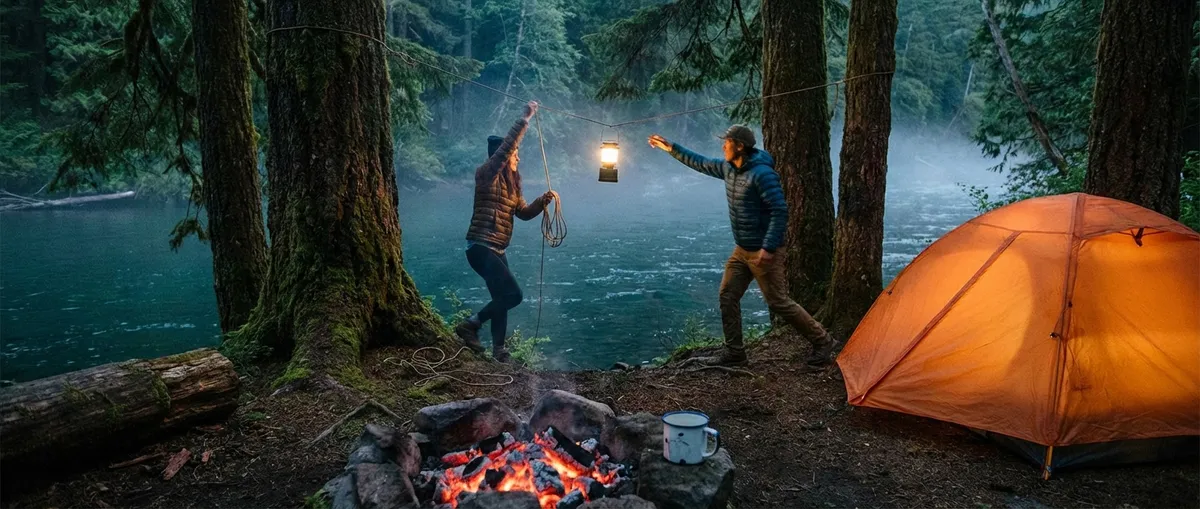
There’s a moment—right after you zip the tent, the wind hushes, and the first star burns through the twilight—when the whole world feels like it’s holding its breath with you. That’s the magic of camping when it’s done well: not just surviving outside, but building a tiny, temporary home right in the heart of the wild. This isn’t about picture-perfect van setups; it’s about dirt under your nails, firelight on your face, and the quiet confidence that comes from knowing you belong out here.
Welcome to TrailNux’s deep dive into camping that’s both rugged and smart: the gear that actually matters, the safety habits that keep you coming back, and the stories that remind you why you pitched your life under the open sky in the first place.
Building a Camp That Works With the Wild, Not Against It
The best camps feel like they grew out of the trail itself. They’re efficient, safe, and respectful of the land you’re standing on.
Start by reading the terrain like a map of future problems. Flat spots are good, but not all flat spots are equal. Avoid low pockets where rain can pool, even if the ground looks inviting. Check above you: dead branches—“widowmakers”—can ruin far more than your sleep. Look for subtle high ground with natural wind breaks like shrubs, boulders, or a gentle rise in the land.
Your tent isn’t just a shelter; it’s your storm strategy. Pitch with the narrow end facing the prevailing wind to cut down on flapping and strain on the poles. Use every guyline in rough weather—most people don’t, and then blame the tent when the storm wins. If you’re in a buggy area, set up before dusk so you’re not playing mosquito roulette while fumbling with poles and stakes.
Create a functional “village” layout. Sleeping area upwind, cooking area downwind, and a clear, safe path to your bathroom zone or cathole site (at least 200 feet from water sources, trails, and camp). Keep your food and scented items (yes, toothpaste counts) stored away from your sleeping area—hung properly or in a bear canister if needed. Think of it as drafting a tiny city plan where the mayor is common sense and the main law is: don’t attract trouble.
As night falls, pay attention to light discipline. One lantern in the cooking zone, one headlamp per person, and that’s usually enough. You’re out here to see the stars, not erase them under a glowing LED stadium.
Gear That Earns Its Weight on the Trail
Every piece of gear you carry should solve a real problem, not just look good in a gear flatlay. If it doesn’t meaningfully improve safety, sleep, warmth, or navigation, it’s a candidate for the “leave it home” pile.
Start with the big three: shelter, sleep system, and pack. A reliable three-season tent with a full-coverage rainfly and solid ventilation beats an ultralight, fragile shelter in most beginner and intermediate situations. Pair it with a sleeping bag rated about 10°F (5–6°C) lower than the coldest expected temperature, plus an insulated sleeping pad—half of your warmth comes from that pad, not the bag.
For clothing, think in systems, not outfits: a moisture-wicking base layer, an insulating mid-layer, and a waterproof-breathable shell. Cotton is nostalgic but dangerous when wet; synthetics and wool are your real ride-or-die fabric friends. Pack an extra pair of dry socks reserved only for sleeping—those tiny grams are worth their weight in morning morale.
When it comes to cooking, a compact, stable stove with a reliable ignition method (bring a lighter plus backup matches) trumps anything complicated. One pot, one mug, one utensil can handle almost every backcountry meal. Keep your food simple: meals that require only hot water reduce fuel use, dishwashing hassle, and critter-attracting crumbs.
Don’t overlook the “quiet” essentials: a sturdy headlamp with a red-light mode, a real first-aid kit (tailored with blister care, pain relief, and bandages you actually know how to use), plus a map and compass—even if you rely on GPS. Electronics fail; terrain doesn’t.
In the end, the most life-changing piece of gear is knowledge—knowing how to improvise, adapt, and get creative when something breaks, disappears, or never worked properly to begin with.
Safety as a Superpower, Not a Buzzkill
True adventure isn’t reckless; it’s calculated courage. The goal is not avoiding risk altogether, but understanding it well enough to move through the wild with calm, informed confidence.
Start with your plans. Tell someone exactly where you’re going, when you’ll be back, and what to do if you’re overdue. Share your trailhead, your rough route, and your vehicle description. It takes five minutes and buys you a safety net that can matter when things go sideways.
Weather is the wild’s mood ring. Check forecasts before you leave, then watch for real-time data: fast-moving clouds, sudden wind shifts, temperature drops. If you’re camping in mountain or canyon country, respect how quickly conditions can flip. Lightning? Avoid high ridges, lone trees, and open fields; seek lower, uniform terrain.
Wildlife safety isn’t about fear; it’s about respect and distance. Store food according to local recommendations—bear hangs, bear canisters, or secure lockers. Keep a clean camp: no food scraps in the fire, no wrappers in your pockets overnight, no “it’s just a tiny snack” in the tent. Know the wildlife in your area and how to respond: talk calmly and back away from most large animals, avoid running, and make noise while hiking in dense vegetation.
Water safety matters just as much as big-animal fears. Always treat water—boiling, filtering, or using chemical treatments—no matter how pristine it looks. Dehydration and waterborne illness are the kind of invisible problems that only show up when you’re already far from help.
Finally, understand your own limits. Turnaround times are not suggestions; they’re contracts you make with yourself. It takes more strength to say “not today” and live to camp another night than to push on into a situation your skills can’t cover.
Fire, Stars, and the Art of Staying Present
The heart of camp isn’t gear or technique—it’s presence. The moments that stay with you are rarely about the perfect pitch or the lightest pack; they’re about how the night felt when the sky cracked open with stars and the world went quiet enough for you to hear your own thoughts.
Sometimes that moment comes by the fire. You’re eating a hastily rehydrated meal, the wind has finally calmed, and someone starts telling the story of a trip that went completely wrong—but ended up unforgettable. The sparks rise, the shadows flicker, and you feel it: this is why you carry the weight and hike the miles.
Other times, it’s solitude that hits you the hardest. Maybe you step away from camp for a few minutes, turn off your headlamp, and let your eyes adjust. The Milky Way appears like a river of light you’d forgotten existed. The air smells like pine, smoke, and cold. For a moment, you’re not thinking about tomorrow’s miles, or unread emails, or anything at all. You’re just here. That’s the whole point.
To make room for these moments, strip away distractions. Put your phone on airplane mode or leave it in your pack unless you truly need it. Linger a bit in the morning instead of racing to breakdown camp. Brew a slower cup of coffee. Watch how the first light hits the ridgeline and the world warms up, one ridge at a time.
The wild doesn’t ask you to be perfect. It just asks you to show up fully.
Trail Stories: When Plans Shift and Camp Becomes a Lifeline
Ask enough seasoned campers about their most memorable night out, and you’ll rarely hear about the trips where everything went right.
There’s the pair who misjudged their pace, rolling into a high desert saddle as the horizon swallowed the sun. Too tired to push on, they threw together a minimalist camp: no ideal flat spot, just enough shelter pitched between scrub bushes and a wind that refused to relax. All their careful plans—scenic lake, early bedtime, golden-hour photos—were gone. Instead, they got something better: a front-row seat to a meteor shower they never saw on the forecast, wrapped in sleeping bags, laughing at how thoroughly the trail had ignored their itinerary.
Or the solo hiker who watched a storm build over the range faster than the forecast promised. Instead of chasing the original destination, they made the call: drop lower, set up early, double-check guylines, cook fast, and hunker down. The night was loud—thunder, wind, rain hammering the fly—but the tent held, the plan held, and they walked out the next morning with a story not of disaster, but of preparedness paying off.
These stories share a pattern: readiness plus flexibility. The gear mattered. The safety skills mattered. But so did the mindset—viewing the unexpected not as failure, but as the raw material of adventure.
Every camp you build is a conversation with the landscape and the weather. Some nights it whispers. Some nights it roars. When you know what you’re doing and you’re willing to adapt, both can be unforgettable.
Conclusion
Camping isn’t just sleeping outside—it’s learning to carve a life-sized pause in the middle of the wild and call it home for a night. It’s the quiet satisfaction of a solid pitch in rough terrain, the warmth of a well-earned meal under cold stars, and the steadiness that comes from knowing you can handle more than you thought.
Pack the gear that truly earns its place. Practice the safety skills that give you room to explore boldly. And then, when the sun drops and the embers glow, let yourself be fully there—present, small, and incredibly alive under a sky big enough to hold every trail you haven’t walked yet.
The path is waiting. Go build your next camp where the map turns from ink into memory.
Sources
- Leave No Trace Center for Outdoor Ethics - Detailed guidance on campsite selection, campfire practices, and low-impact camping principles
- National Park Service – Camping Safety Tips - official advice on staying safe while camping, including wildlife, fire, and weather considerations
- REI Co-op – Expert Advice: How to Go Camping - Comprehensive beginner-to-intermediate overview of camping gear, camp setup, and trip planning
- Centers for Disease Control and Prevention – Safe Water Treatment - Evidence-based information on treating drinking water in the backcountry
- American Hiking Society – Hiking and Trail Safety - Practical safety guidelines for planning trips, dealing with weather, and staying prepared outdoors