
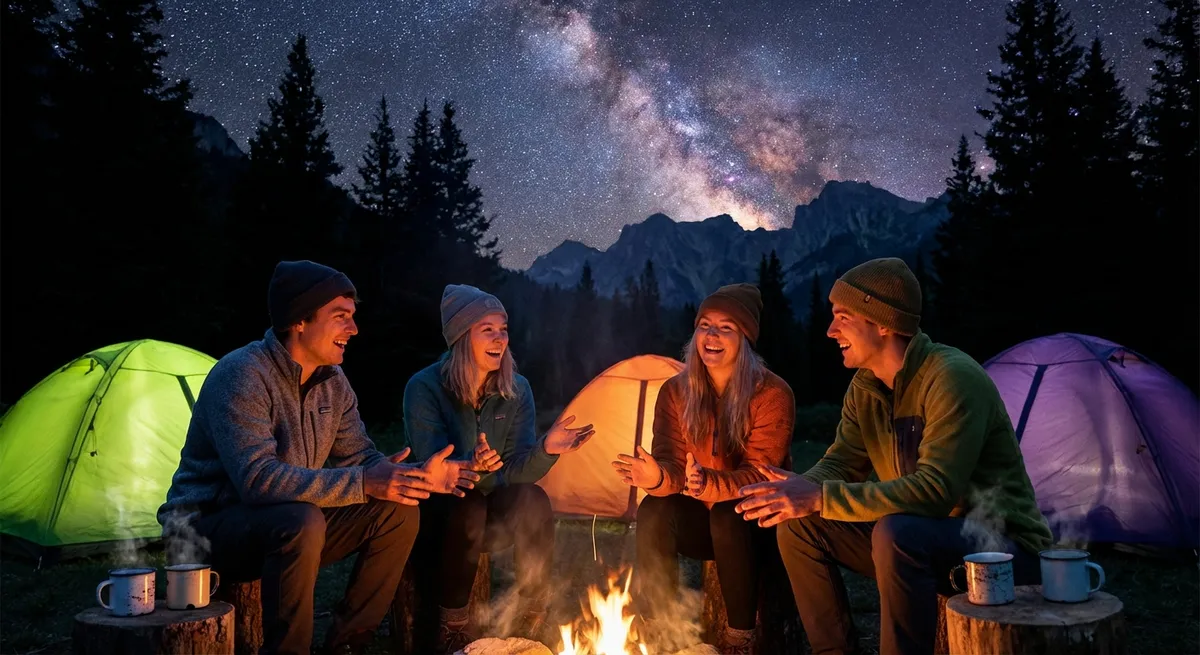
There’s a moment on every great trip when the fire is low, the stars are loud, and you realize you’re exactly where you’re meant to be. That’s the magic TrailNux lives for—nights under a cold sky, boots still dusty from the day’s climb, and the quiet hum of the wild all around you. This guide is your trail buddy: practical camping tips, dialed-in gear recommendations, safety wisdom, and real trail stories to fire up your next adventure.
Dialing In Your Basecamp: Choosing the Right Spot
Your camp isn’t just where you sleep—it’s your launchpad for adventure and your refuge when the weather turns.
Look for durable surfaces like packed dirt or gravel, avoiding fragile vegetation and cryptobiotic soil. Pick a site at least 200 feet (about 70 adult steps) from lakes and streams to protect water sources and reduce condensation in your tent. Scan above for dead branches (“widowmakers”) that could fall in the wind, and avoid camping in dry creek beds that can flash-flood with distant storms.
Try to position your tent with the narrow end facing into the prevailing wind to reduce flapping and strain on poles. If rain is likely, look for slightly elevated ground so water flows away from you, not under you. In open areas, use natural windbreaks like boulders or clumps of trees, but avoid dense brush where critters and ticks like to hang out.
Think about your “camp triangle”: tent, kitchen, and food storage separated by at least 50–100 feet. This spacing keeps food smells away from your sleeping area and makes camp feel organized and intentional—like a tiny, temporary village built to serve your adventure.
Gear That Delivers: What Actually Matters Out There
A good kit doesn’t need to be expensive, but it does need to be intentional. Focus first on the “Big Three”: shelter, sleep system, and backpack.
For your shelter, choose a tent rated for the conditions you expect. A 3‑season tent works for most trips; go 4‑season only if you’re tackling serious winter conditions or high alpine routes. Make sure the rainfly fully covers the tent and reaches near the ground—this matters more than fancy features when the sky opens up at 2 a.m.
Your sleep system is your nightly recharge station. A sleeping bag rated about 10°F (5–6°C) lower than the lowest temperature you expect will keep you comfortable, not just barely surviving. Pair it with an insulated sleeping pad; R‑value matters more than thickness when nights get cold. Treat this combo like body armor against fatigue—better sleep means better decisions on the trail.
Backpacks should match your trip length and load, not your ego. For most weekend trips, 40–60 liters is the sweet spot. Try packs on with weight, adjust the torso length if possible, and make sure 60–80% of the weight rides on your hips, not your shoulders. Add a lightweight headlamp (with a red-light mode), a compact first-aid kit, and a backup fire starter (like a mini Bic plus waterproof matches) and you’ve got the foundation of a solid, trail-ready kit.
Fire, Food, and Fuel: Camp Comforts Done Right
A well-run camp kitchen is part science, part art, and 100% morale booster. Start with a reliable stove—canister stoves are quick and easy for most backpackers, while liquid-fuel stoves shine in cold temperatures and high altitudes. Always test your stove at home before your trip; camp is not the time for first impressions.
Plan meals around simplicity, not cuisine competitions. Think boil-and-eat: instant rice, couscous, dehydrated meals, pre-cooked lentils, and oatmeal with add-ins like nuts, dried fruit, and powdered milk. Pack food in labeled, resealable bags and keep one “day bag” easily accessible so you’re not unpacking your entire pack for a single snack.
If campfires are allowed (and conditions are safe), treat them as a privilege, not a given. Use existing fire rings, keep fires small, and burn only dead and downed wood that breaks easily by hand. Always have water and a shovel or stick nearby. Before bed, drown the fire, stir the ashes, and drown again until it’s cold to the touch—if you can’t comfortably press your hand near it, it’s not out.
Store food in bear canisters, bear hangs, or designated lockers where required. Even in areas without bears, critters like raccoons, mice, and foxes can raid your stash. A single night of poor food storage can train wildlife to associate campers with easy calories—something that often ends badly for the animals.
Safety First, Adventure Always: Navigating Risks Smartly
The wild isn’t dangerous because it “wants” to hurt you—it’s dangerous because it doesn’t care whether you’re prepared. That’s your job.
Start with a realistic itinerary and share it with someone back home, including where you’re starting, planned campsites, and when you expect to return. Check the latest weather forecast and trail conditions right before departure; conditions can shift quickly, especially in mountains and deserts.
Navigation should never rely solely on your phone. Carry a paper map and a compass, and at least know how to orient the map, identify terrain features, and follow a bearing. A GPS or app is an awesome backup—but batteries die, screens crack, and signal drops.
Hydration is non-negotiable. For most hikers, 0.5–1 liter of water per hour of moderate activity is a good starting point, more in hot, dry, or high-altitude conditions. Treat all untreated water with a filter, purifier, or tablets. Don’t wait until you’re parched; sip throughout the day, and start camp with a full reservoir whenever possible.
Watch for early signs of trouble in yourself and others: headache, confusion, nausea, clumsiness, or drastic mood shifts can signal dehydration, hyponatremia (too little salt), heat illness, or altitude sickness. If someone on your team “feels off,” slow down, refuel, rehydrate, and reassess. Pride is cheap; rescues are not.
Nightfall on the Ridge: Trail Stories from the Wild
On a rugged loop in the high desert, our TrailNux crew once pushed for a campsite marked near a seasonal spring. The topo lines said “gentle climb.” Reality said “endless staircase of loose rock.” Sun dropping, legs burning, packs heavy—we were chasing a water source that might not exist. Classic rookie trap: trusting a map more than the sky.
An hour later, we crested a saddle with no spring in sight—just a bone-dry basin and a tangerine sunset stretching across the horizon. We did a quick team check: water left, energy, daylight, nearest bailout. Instead of pushing deeper into the unknown, we played it smart. We set up camp on the ridge, rationed water, cooked a simple meal, and turned the moment into something bigger than the plan.
That night, the wind kicked hard against the tents, but our well-placed stakes and low-profile camp held steady. We watched storms fire lightning over a distant valley, safe and dry, with just enough water to spare for morning coffee. At dawn, we followed a faint drainage downhill and found the spring at first light—trickling but real, guarded by a small stand of cottonwoods.
The lesson wasn’t just about water or navigation; it was about mindset. Adventure isn’t a straight line. Sometimes the best story comes from choosing caution over bravado, from calling camp early, or from turning back before the summit. The wild rewards those who respect its terms.
Leave No Trace: Protecting the Trails We Love
Every campsite is borrowed. The way we move through it decides whether someone else can experience the same magic years from now.
Follow Leave No Trace principles: travel and camp on durable surfaces, pack out all trash (yes, even micro trash like food wrappers and twist ties), and dispose of human waste properly—200 feet from water, trails, and camp, in a cathole 6–8 inches deep, covered and disguised when you’re done. In many popular or fragile areas, that means packing it out entirely using wag bags or designated systems.
Resist the urge to build structures—no rock couches, log fences, or carved initials. Your photos and memories are enough. Keep wildlife wild by not feeding animals, managing your food and trash, and giving them space. If your behavior changes their behavior, you’re too close.
When you leave camp, aim for this test: if a skilled ranger or experienced hiker walked through an hour later, they’d struggle to tell exactly where you slept. Invisible camps leave room for countless other adventures, including your own return.
Conclusion
Camping isn’t about escaping life; it’s about meeting it head-on—under starlight, in wind and rain, with dirt under your fingernails and a sense of possibility in your chest. With smart gear, dialed-in safety habits, and a commitment to leaving wild places better than you found them, you can push deeper, stay longer, and breathe a little wilder.
The trail is waiting—the quiet pines at dawn, the ridge lines that pull you upward, the shared laughter around a small, crackling fire. Pack well, plan smart, and step out the door. The next great story you tell around the campfire might be your own.
Sources
- Leave No Trace Center for Outdoor Ethics - Core principles for minimizing impact while camping and hiking
- National Park Service – Camping Safety Tips - Official guidance on staying safe in U.S. national parks
- REI Co-op – How to Choose a Backpacking Pack - Detailed advice on sizing and selecting a backpack for camping trips
- Centers for Disease Control and Prevention – Safe Drinking Water in the Backcountry - Evidence-based information on treating and handling backcountry water
- American Hiking Society – Hiking Safety - Practical guidelines for trip planning, navigation, and trail safety