
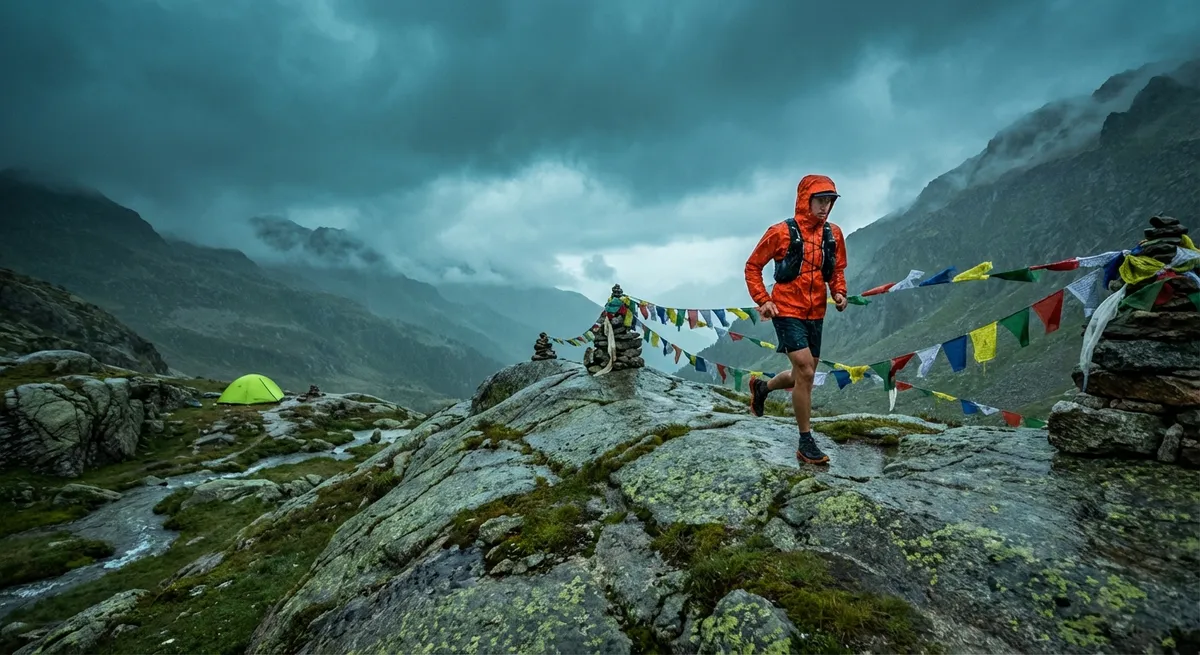
There’s a moment on every trail when comfort gives up, and character takes over. Your pack is digging in, the wind is louder than your thoughts, and the sky looks like it’s deciding your fate. That’s when your gear stops being “stuff” and becomes survival, freedom, and confidence all rolled into one. At TrailNux, we live for that moment—when the right kit turns “maybe we should turn back” into “let’s see what’s over the next ridge.”
This isn’t about ultra-minimalist suffering or gear-hoarder overkill. It’s about building a trail-tested setup that actually matches how you move through wild places—and knowing how to use it when the weather, terrain, and your own limits start to bite back.
Gear That Works as Hard as You Do
Before you chase distant ridgelines or remote forest loops, your gear needs to earn its place on your back. Every item should do at least one of three things: keep you moving, keep you safe, or keep you sane.
A good shell jacket is your mobile shelter. Look for a waterproof-breathable layer with sealed seams, pit zips, and a hood that turns with your head instead of blocking your vision. On exposed ridges or in sideways rain, this single piece of gear can decide whether your story is “epic” or “I had to call for help.”
Your pack should disappear on your body when it’s loaded. A supportive hip belt that actually carries weight, adjustable back length, and accessible side pockets matter more than trendy colors or extra zippers. When you’re scrambling or bushwhacking, being able to snag water or a snack without stopping keeps your momentum and your morale alive.
Don’t underestimate base layers. Merino wool or quality synthetic fabrics keep you warm when damp and don’t reek after a day of sweat and mist. On long days, that comfort becomes mental armor—especially when the only thing between “miserable” and “magic” is a dry shirt and a wind-blocking mid-layer.
Footwear is your foundation. Think less about brand and more about purpose: waterproof hikers for slushy spring trails, breathable trail shoes for fast, dry routes, and stable, grippy soles for rocky technical terrain. When your feet are happy, your courage travels further.
Trail Stories from the Edge of Comfort
Some gear lessons only arrive when the wild throws the script away. Ask any seasoned adventurer about their sketchiest day outside and you’ll usually hear two things: what went wrong—and which piece of gear quietly saved the day.
There was the solo hiker who underestimated a shoulder-season mountain loop. The forecast said “light showers,” but a surprise front brought freezing rain and gusts strong enough to knock her sideways. What kept the day from turning into a rescue? A compact emergency bivy and a headlamp she nearly left in the car. Sheltering behind a boulder, wrapped in reflective mylar with steady light to sort her map, she waited the worst out, then navigated down safely once the wind eased. Gear didn’t make her invincible, but it gave her the margin she needed to think clearly instead of panic.
Or the group that set out on a late-summer canyon hike, assuming their phone GPS was all they’d need. When the canyon walls swallowed their signal and their planned shortcut turned into a maze of side gullies, it was a simple paper topo and a basic compass that turned confusion into a puzzle they could solve. Gathering around the map, they traced contour lines, read the land, and found a safer exit route before dusk. What could’ve been a desperate scramble became a hard-earned lesson in analog navigation.
The point isn’t that you need the most expensive gadgets. It’s that the right essentials—in your pack, not your gear closet—turn bad luck into a story you can laugh about later. Every near-miss you walk away from with new respect for your kit is another thread in your personal trail legend.
Safety as a Skill, Not Just a Checklist
Carrying the right gear is only half the equation; the other half is knowing how to use it when adrenaline drains your brain. Safety in the wild is a skill you practice long before you’re above treeline with clouds stacking on the horizon.
Start with navigation. Even if your phone has offline maps, learn to read a topo map like it’s a language: contour lines tell you how steep that shortcut really is, ridgelines and drainages show you natural handrails, and saddle points hint at easier crossings. Practice using a compass on low-risk local trails so you aren’t learning for the first time in fog or snowfall.
Your first-aid kit should be more than a sealed pouch you never touch. Build or customize yours with what you actually know how to use: blister treatment, elastic wrap, gauze, pain relief, and a few bandages are a baseline. Take a basic wilderness first-aid course if you can; knowing how to splint an ankle with trekking poles or recognize early hypothermia signs is as valuable as any ultralight gadget in your pack.
Weather awareness is its own kind of gear. Before heading out, read not just the forecast but also the discussion or detailed outlook when available. Learn how fast weather can shift in your local mountains or deserts. On the trail, watch for building clouds, changing wind direction, and temperature drops. The real pros aren’t the ones pushing through “no matter what”—they’re the ones who turn back early and still feel proud of the decision.
Finally, tell someone your plan. A quick text or note with your route, start time, and return window is the simplest “safety gear” you own. Combined with a satellite messenger or PLB on remote trips, it turns your adventure from a gamble into a calculated risk.
Dialing in Your Loadout for Different Wild Places
The right gear for a damp, mossy forest path is completely different from what you need on a sun-scorched, high-desert ridge. Treat your loadout like a living system, not a fixed list.
In mountain environments, layers are life. Pack a warm mid-layer even on days that start sunny, and don’t skimp on gloves and a beanie; extremities chill fast when the wind rises. Trekking poles earn their spot here, giving you extra stability on scree, snow patches, and steep descents that punish knees and ankles.
In forests and heavily wooded trails, visibility and dryness are key. A wide-brimmed hat, gaiters for wet underbrush or mud, and a bright-colored outer layer that stands out in low light can all pay off. A small, powerful headlamp is essential—dense canopy eats daylight faster than open terrain, and “just one more mile” turns to “it’s darker than I planned” in minutes.
In desert and arid landscapes, sun protection becomes serious gear, not an afterthought. A breathable sun hoodie, high-SPF sunscreen, UV-protective sunglasses, and a wide-brimmed hat protect you from slow, energy-sapping burn. Water capacity matters more than just carrying a filter; bring enough actual volume to cross dry stretches and cache water if your route is long or uncertain.
Regardless of the terrain, one constant remains: your gear should match your objective, not your social feed. When you’re honest about your route, your pace, and your risk tolerance, your kit transforms from “nice stuff to own” into a sharp, purpose-built toolset that lets you move boldly yet intelligently through wild places.
Trail-Ready Essentials That Earn Their Weight
Every gram in your pack is a vote: you’re betting that item will matter more on the trail than it does on your living room floor. Some pieces almost always win that bet.
A reliable water purification system—whether it’s a squeeze filter, pump, or chemical tablets—turns every stream into potential resupply. Pair it with sturdy, easy-to-fill bottles or a bladder you can clean and maintain. Dehydration doesn’t always look dramatic; sometimes it’s subtle bad decisions, small stumbles, and a shrinking sense of humor.
Fire starters—lighter, stormproof matches, and a backup like tinder or a ferro rod—are your warmth and your morale. Even if you never plan a campfire, being able to start one in an emergency in cold or wet conditions is a foundational survival skill.
A compact, high-lumen headlamp with fresh batteries (or a solid rechargeable) is non-negotiable. Trails look completely different in the dark; a strong beam turns that mystery into manageable terrain, whether you’re finishing a long day or dealing with an unplanned delay.
Rounding it out, lightweight emergency shelter like a bivy sack or space blanket, a multi-tool or small knife, and a whistle weigh very little but multiply your options when plans derail. These are the items that move you from “hoping things go right” to “prepared if they go wrong.”
Conclusion
Every great trail story has two characters: you, and the wild. Your gear is the supporting cast—never the star, but absolutely the difference between tragedy and triumph, misery and meaning. When you choose equipment that’s built for real-world hardship and pair it with skills you actually practice, you earn the right to push deeper, stay out longer, and trust yourself when the predictable ends.
Somewhere beyond the last switchback, there’s a moment waiting where the wind rises, the trail thins, and you realize you’re farther out than you’ve ever been—and exactly where you’re meant to be. If your pack’s dialed, your safety is squared away, and your mindset is tuned to learn instead of conquer, that moment stops being scary and starts being the reason you came.
Load smart. Move bold. Let the wild test your gear—and show you what you’re really made of.
Sources
- REI Co-op: Expert Advice – Backpacking and Hiking Gear Lists – Detailed breakdowns of essential gear and how to choose items for different trips and environments
- National Park Service – Hiking Safety – Official safety guidance on preparation, navigation, and decision-making in U.S. national parks
- American Hiking Society – Ten Essentials – Explanation of the classic “Ten Essentials” framework and why each category matters
- Centers for Disease Control and Prevention – Heat and Sun Safety – Evidence-based advice on preventing heat-related illnesses outdoors
- Harvard Medical School – Cold Weather Safety – Practical overview of hypothermia, frostbite risks, and how proper clothing and preparation reduce danger